 Aruba Photoshoot
What to Wear for a Photoshoot in Aruba: Colour, Fabric and Wind
Deciding what to wear for a photoshoot in Aruba is really three separate problems: the background is bright enough to swallow dark clothes, the temperature sits between 30 and 33 °C every month of the year, and the trade winds blow constantly and will move anything loose. The photographers on this island say so themselves in their listings. This page collects their advice, adds what the light actually does to different colours on white sand, and ends with a checklist you can pack from. The sessions themselves are compared on the Aruba photoshoot catalogue.
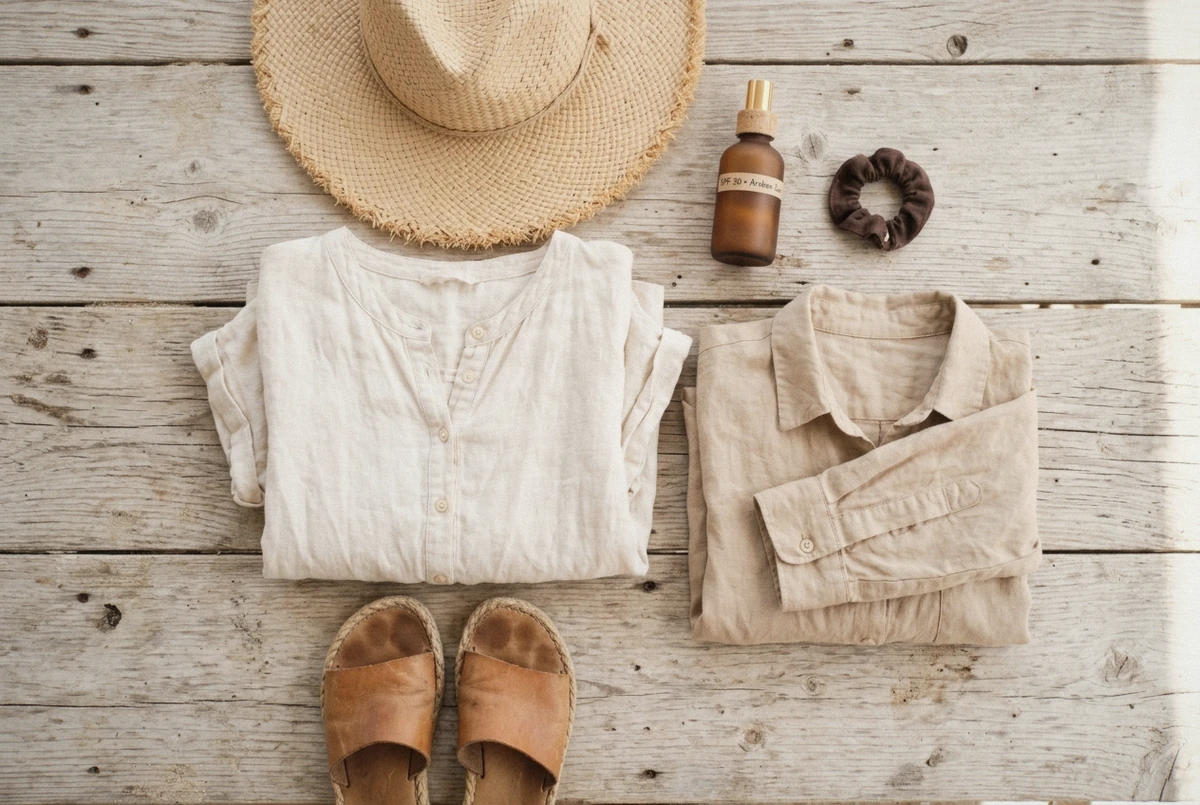
Light colours, natural fabrics, flat shoes and something to tie your hair back with.
Quick answer
Light, solid colours or a tropical print, in a fabric that moves: linen, cotton, chiffon. That is the photographers' own guidance on their listings, and it is right, because white sand throws light back up under the chin and dark or heavily patterned clothes fight that instead of using it. Skip jeans, which are miserable at 30 to 33 °C, and bring something to secure your hair, since the trade winds blow all year and peak from May to August. Barefoot is standard, so pack shoes for afterwards rather than for the sand.
Key takeaways
- Colour first: light solids and tropical prints read against turquoise; black and busy patterns do not
- Fabric decides the movement: a hem that lifts in the wind is the difference between a photo and a snapshot
- The couples listing tells you outright to secure your hair with spray or accessories, and the wind is the reason
- Booking a flying dress session? The dress comes with it, and a regular bra cannot go underneath
- The packing checklist is at the bottom, six lines long
Colour: What the Background Does to Your Outfit
Aruba's leeward beaches are a high-key background: white sand, pale turquoise, hard blue sky. Everything you wear is judged against that, and the rules are less about fashion than about exposure.
Why light solids work
White sand acts as a reflector. Light bounces off it and back up under the chin, which softens shadows on faces and is the reason golden hour on a beach flatters people who photograph badly everywhere else. Light-coloured clothing continues that effect; cream, sand, soft white, pale blue and blush all sit in the same tonal range as the background and let faces be the darkest, most detailed thing in the frame.
The photographers here say the same in plainer words. The family session listing asks for comfortable, coordinated outfits in light, neutral colours. The couples session asks for light solid colours or tropical prints, which look fantastic against the blue ocean.
| Choice | Against white sand and turquoise | Verdict |
|---|---|---|
| Cream, sand, soft white | Sits in the background's tonal range; faces stay the most detailed thing in frame | Safest option |
| Pale blue, blush, sage | Reads as colour without competing with the sea | Works all day |
| Tropical print | Recommended on the couples listing; keeps energy without going dark | Good on one person, busy on four |
| Bright red or cobalt | Pulls every eye to the fabric rather than the face | Use deliberately or not at all |
| Black | Becomes a silhouette in bright light; the camera must choose face or sea | Sunset only, or a rock location |
| Busy small patterns | Fights the sand texture and dates quickly | Avoid, especially for groups |
Why black is the hard mode
Black is not forbidden and it is not easy. Against a bright background a black outfit becomes a silhouette with no detail, and the camera has to choose between exposing for your face or for the sea. A skilled photographer will make it work at sunset, when the whole scene drops in brightness. At 10am it fights back.
If you want drama rather than softness, the better route on this island is location rather than wardrobe: the black volcanic pebbles at Blackstone Beach or the ruined smelter at Bushiribana, both on our photo spots map, give you contrast the leeward beaches never will.
Coordinating a group without matching
The word on the listing is coordinated, not identical. Matching outfits flatten a family into a uniform; a shared palette with different pieces keeps everyone distinct. Pick two or three tones in the same brightness range, for example cream, sand and pale blue, and let the shapes vary.
One practical addition for families: whoever is holding a small child should wear the plainest thing in the group, because a busy print becomes the background for that child's face.
Fabric, Heat and Movement
The heat is constant, not seasonal
Aruba's average day high sits between 30 and 33 °C in every month of the year. There is no cool season to plan around, only a marginally less hot one. That rules out anything heavy long before it rules out anything unflattering.
Jeans are the specific mistake people make, usually because they photograph well at home. On this island they are hot, they do not move, and they read as out of place against sand. Linen, cotton, rayon and chiffon all behave better in the heat and in the wind.
| Fabric | In 30 to 33 °C | In the trade wind |
|---|---|---|
| Linen | Coolest thing you can wear | Moves well, creases visibly |
| Cotton | Comfortable all day | Moves moderately |
| Chiffon or tulle | Light and breathable | Best movement of anything; the flying-dress material |
| Rayon or viscose | Comfortable, drapes well | Good hem movement |
| Denim | Hot and unforgiving | Does not move at all |
| Heavy knit or velvet | Unwearable at this latitude | Irrelevant, you will not last the session |
Movement is the whole trick
The photographs people love from beach sessions almost always contain motion: a hem lifting, a skirt turning, hair crossing a face. A dress with a long flowing hem gives a photographer something to work with on every frame; a fitted sheath gives them nothing but your posture.
This is also the entire premise of the flying dress format, where a several-metre train exists purely to be thrown into the wind by an assistant. You do not need to go that far to use the principle. A wide skirt and a light fabric get you most of the way for the price of packing one dress.
Shoes: bring them, then take them off
Almost every frame from an Aruban beach session is barefoot, because sand and shoes photograph badly together and because walking in heels on soft sand is unpleasant. Bring flat sandals you can leave on a towel.
The exceptions are the non-beach locations. If your session includes an Oranjestad street backdrop or you are shooting yourself at the California Lighthouse or Ayo, you want real shoes for the ground rather than something you can slip off.
The Wind, Which Is Not a Detail
Aruba's trade winds are its defining weather feature. They blow all year, they peak from May to August, and they are the single biggest difference between shooting here and shooting on a sheltered Caribbean beach.
What the operators say about it
The couples session listing opens its know-before-you-go with the wind: Aruba is known for its trade winds, and it suggests securing hair with hairspray or accessories to keep it looking its best. A flying-dress studio goes further and refuses to include hair styling at all, on the grounds that the wind will undo it and the format shoots from a distance where the detail does not read anyway.
When two independent operators build their advice around the same variable, plan for it rather than hoping.
Long hair, veils and hats
Long loose hair will move constantly. That is not automatically a problem; hair crossing a face in warm light is a good photograph. It becomes a problem when it covers eyes in every frame, which is what a tie, a clip or spray prevents.
Veils are the hard case. Anyone shooting a vow renewal or an engagement should know that a veil in an Aruban trade wind behaves like a sail and needs a second pair of hands. Sun hats are the same: hold it rather than wear it, or accept that it will leave at some point during the session.
If calm air matters more to you than drama, September and October are the least windy weeks of the year, as the seasonal chart shows.
What the wind is good for
Used deliberately, it does work no photographer can fake in a still frame: a dress that flies, hair that lifts, fabric that shows movement. The glam kayak session leans into it from above with a drone, and the flying-dress studios exist entirely because of it.
So the advice is not to defeat the wind. It is to bring one thing you can secure and one thing you want moved.
The Rules You Would Not Think to Check
What the listings ban
One session on this island publishes a list of things not allowed at the shoot: weapons or sharp objects, smoking, intoxication, alcohol and drugs, and nudity. Another bans alcohol and drugs specifically. Nothing there is surprising, but it is worth reading before planning a champagne moment on the sand or a boudoir-adjacent concept.
If you were hoping to toast something in the photographs, do it after the session rather than in it.
Underwear, for the specific formats
Two situations need thought in advance. Under a flying dress, a regular bra cannot be worn because of how the gowns are cut; the studio's own suggestion is braless, pasties, or a stick-on or strapless bra. And for any light or white fabric on a bright beach, remember that strong backlight makes thin material considerably more transparent than it looks in a hotel mirror.
Neither is a reason to change your outfit. Both are a reason to test it in daylight before the session rather than discover it in the gallery.
Sunscreen and the shine problem
Sunscreen is non-negotiable at this latitude, and the family session listing asks you to bring it. The photographic side effect is shine: a heavy layer applied five minutes before a shoot leaves a face reflecting the sun.
Apply it early enough to absorb, and bring a tissue or a matte powder if shine bothers you. The alternative, skipping it, ends a good session in genuine sunburn, because the breeze makes the sun feel far weaker than it is.
The Packing List
Six lines, assembled from the operators' own instructions and what the light on this island does.
- One outfit in a light solid colour or a tropical print, in linen, cotton or chiffon
- A second, plainer option in case the wind rules out the first
- Something to secure your hair: tie, clips or spray, per the couples listing's own advice
- Flat sandals for walking to the sand and nothing on your feet in the frames
- Sunscreen applied early enough to absorb, plus a tissue for shine
- Water, and shoes for anywhere that is not a beach
Dress for the Session You Booked
If you booked a beach session at golden hour
light solids, a hem that moves, barefoot, hair secured. Coordinate the group in a shared palette rather than matching pieces
If you booked a clear kayak shoot
a swimsuit is the listing's only stated requirement. Bring sunglasses for the glam session, which asks for them, plus any props you want in frame
If you booked the parasail flight
beach or boat clothes over a swimsuit. Leave sandals and sunglasses on the boat so they do not end up in the sea
If you booked a flying dress session
the dress is supplied and adjusts from XS to XXL. Bring pasties or a stick-on bra, and arrive with your own hair and makeup done
Sessions to Dress For
The beach sessions where this advice matters most, with prices last read from the listings in August 2026.
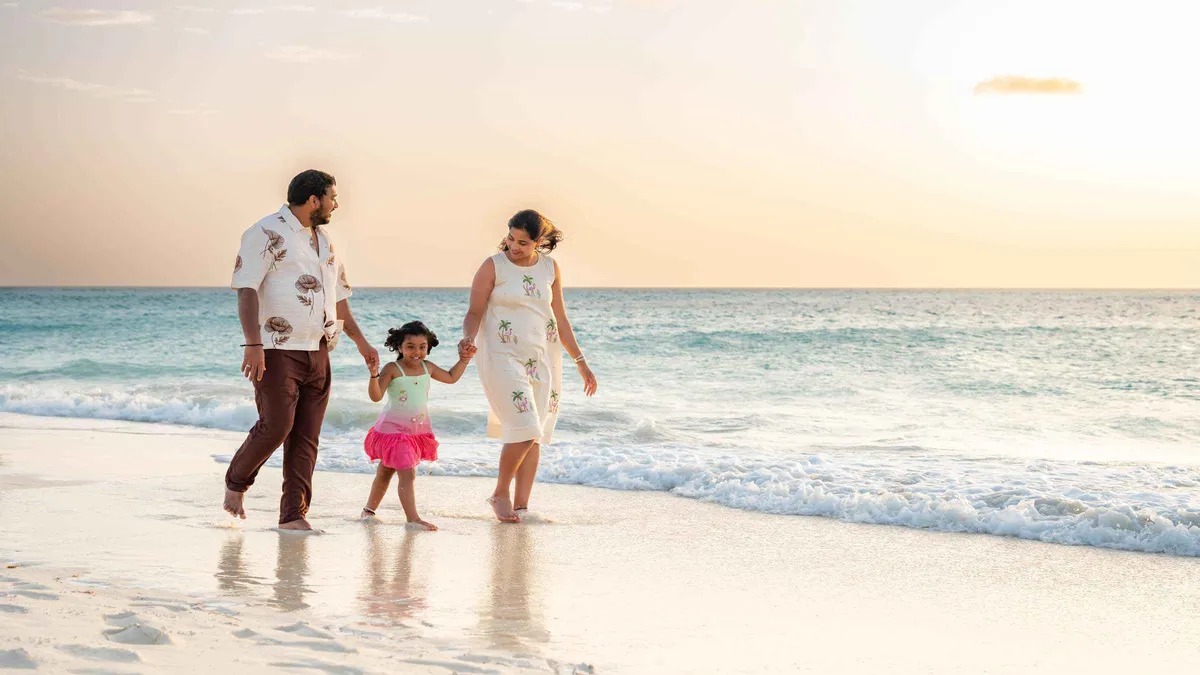
Family Beach Photoshoot at Golden Hour
Built for families: you choose the beach, the photographer handles the posing, pets are allowed at the session and 35 edited images land in a private gallery.
- Free cancellation 24h
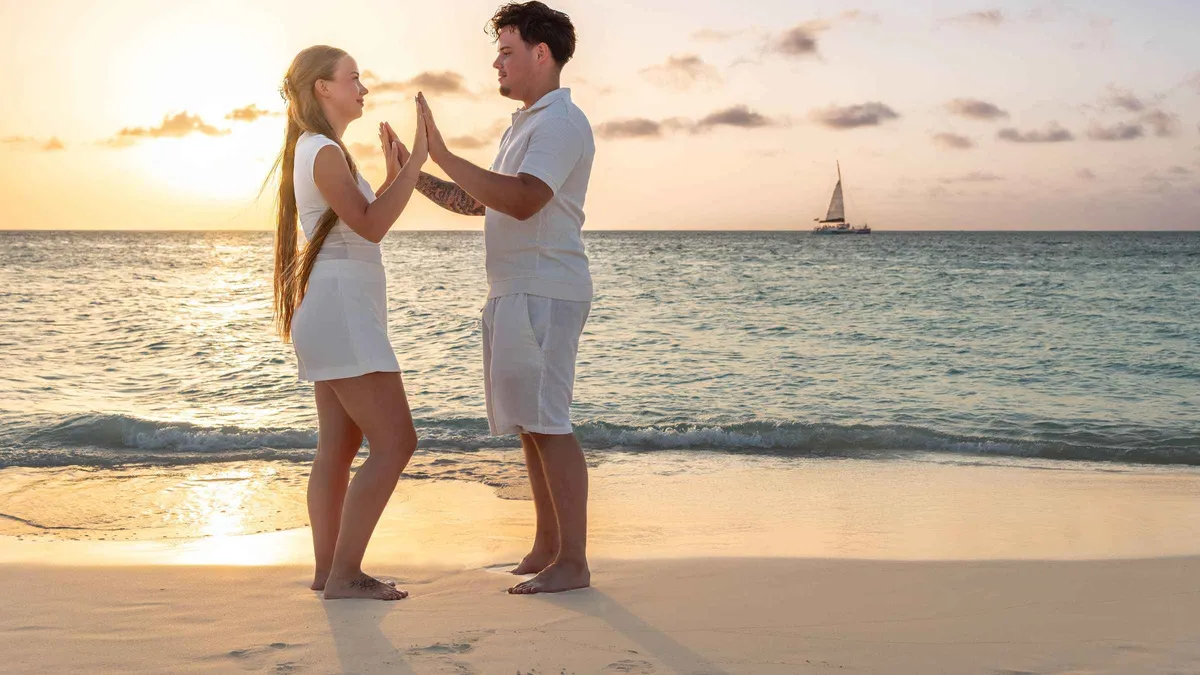
Couples Beach Photoshoot
Honeymoon and anniversary sessions from the same studio as the family shoot, priced for two rather than per head — check the photo count at booking, the listing says 35 in one place and 25 in another.
- Free cancellation 24h
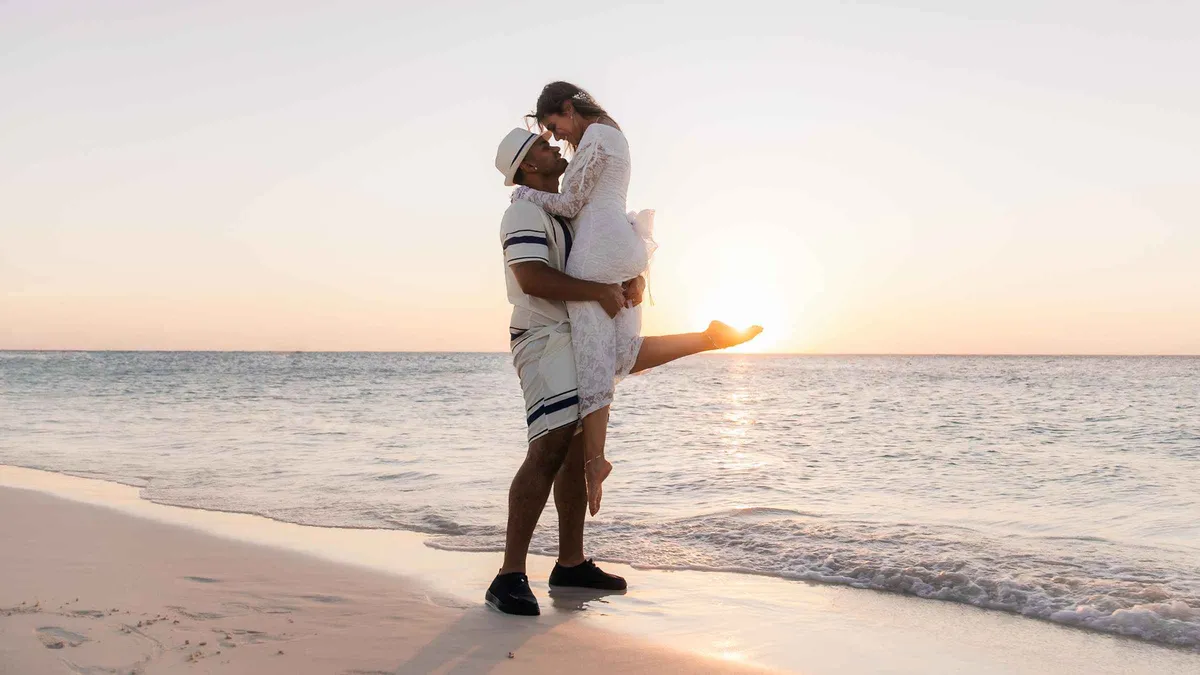
Private Vacation Photoshoot with a Local Photographer
The catalogue's most-reviewed session and the one with the biggest gallery: 45 edited photos on the one-hour option, 20 on the half-hour, back in 4–5 working days.
- Free cancellation 24h
What to Wear in Aruba: Questions
Is Aruba too hot for jeans?
For a photoshoot, yes. Day highs sit between 30 and 33 °C every month of the year and there is no cool season. Jeans are hot, they do not move in the wind, and they read heavy against white sand. Linen and cotton do the same job in photographs without the discomfort.
What colours photograph best on an Aruban beach?
Light solids in the same tonal range as the background: cream, sand, soft white, pale blue, blush. Tropical prints work too, and the couples session listing recommends exactly those two options. Black and busy patterns are the hard mode against a bright, high-key background.
Is there a dress code in Aruba?
Not on the beaches or for photo sessions. Aruba is relaxed, and beachwear is normal on the coast. Away from the sand, covering up in town and in restaurants is the usual courtesy, and Alto Vista Chapel is a working church rather than a backdrop, so dress and behave accordingly there.
What should I wear for a beach photoshoot with children?
Coordinate the family in two or three light tones rather than matching outfits, keep whoever is holding a small child in the plainest piece, and skip anything scratchy or hot. The family session asks for comfortable coordinated outfits in light neutral colours, and allows pets, so factor a dog into the palette too if one is coming.
Do I need to bring my own dress for a flying dress shoot?
No. Both studios supply the gown, adjustable from XS to XXL, and neither includes hair or makeup. A regular bra cannot be worn under one. The flying dress guide covers packages, editing fees and the delivery wait.
How do I stop the wind ruining my hair?
Secure it before the session with a tie, clips or spray, which is the couples listing's own suggestion. Or book September or October, the calmest weeks of the year. Some wind is worth keeping: it is what makes fabric and hair move in the frames people like most.